|
S |
M |
T |
W |
T |
F |
S |
|
1
|
2
|
3
|
4
|
5
|
6
|
7
|
|
8
|
9
|
10
|
11
|
12
|
13
|
14
|
|
15
|
16
|
17
|
18
|
19
|
20
|
21
|
|
22
|
23
|
24
|
25
|
26
|
27
|
28
|
|
|
Forums10
Topics39,919
Posts567,704
Members14,632
| |
Most Online9,918
Jul 28th, 2025
|
|
|
|
Joined: Jan 2002
Posts: 5,963 Likes: 166
Sidelock
|

Sidelock
Joined: Jan 2002
Posts: 5,963 Likes: 166 |
I don't know if Stoeger never picked up on the addition of the .410-bore to the line or what, but none of my old Stoeger Catalogs list the Fulton or the Hunter Special in .410-bore. They are listed as being available in .410-bore in the 1944 Gun Digest. The Fulton Special disappears between the 1932 and 1934 Stoeger Catalogs.
|
|
|
|
|
Joined: Feb 2004
Posts: 13,883 Likes: 21
Sidelock
|
|
OP
Sidelock
Joined: Feb 2004
Posts: 13,883 Likes: 21 |
Cary, Thanks for the 'inside line' on that. 'gotta be the best heeled bunch o'farmers I've seen. 'took the Fulton out today for some quail. 'patterned it on a dirt farm road below a razorback I was on. Shoots little rifle like patterns. Here come da reamer. 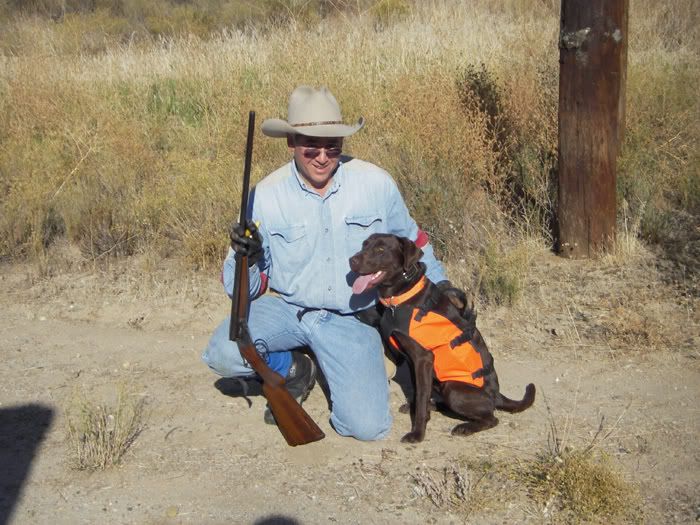
|
|
|
|
|
Joined: Apr 2002
Posts: 6,250 Likes: 1
Sidelock
|
|
Sidelock
Joined: Apr 2002
Posts: 6,250 Likes: 1 |
Chuck! you need a little help with your shooting attire.
Brown mix tweed - to match the color of that telephone pole.
An Irish tweed roll-up cap would be nice too!
Great taste in dogs, tho.
|
|
|
|
|
Joined: Feb 2004
Posts: 13,883 Likes: 21
Sidelock
|
|
OP
Sidelock
Joined: Feb 2004
Posts: 13,883 Likes: 21 |
Lowell,
I need help with a lot of things. But look, my whole head's in the shade!
|
|
|
|
|
Joined: Feb 2002
Posts: 1,096
Sidelock
|
|
Sidelock
Joined: Feb 2002
Posts: 1,096 |
Top Gun...I had heard that same story, but not about Jerrod...THE REASON FOR THOSE TIGER STRIPED receivers I know from experience...the stripes are a function of the pack material layering...I'll try to explain...after several bakings the pack material doesn't show color as well and you have to add new material...rather than mix evenly, it's easier to just layer the old with the new, and layering results in more dramatic coloring than an even mix...those Smith boxlocks show the unmistakable evidence of being pack hardened, in layers, AND in the receivers were in the VERTICAL POSITION when the layers were packed...the reason for vertical layering was mass production based rather than a few at a time...it's easier to hang 16 at a time, evenly spaced in a special made flask, then you begin layering the old pack material with the fresh (pre-treated) material...the cyanide was used for internal parts.
As for the cyanide, it had become apparant that the cyanide bath not only offered SUPERIOR HARDENING PROPERTIES, it required relitively little time, and the temperature could easily be held at precise levels to minimize warpage. The process lends itself to treating small parts much more redily than does pack hardening. All these advantages added to the fact that you no longer need to pack and refresh your packing materials and all the mess associated with it, made the cyanide bath an attractive alternative to pack hardening. For practicle reasons, it's probably best not to mix the two processes. Thats not to say that some wizards haven't figured out a way to mix the two, or that there is no way to get mottled colors out of the cyanide bath and quench. I've tried both, but with little colors to show for it...perhaps I gave up experimentation too early..
|
|
|
|
|

