|
S |
M |
T |
W |
T |
F |
S |
|
|
|
|
|
|
|
1
|
|
2
|
3
|
4
|
5
|
6
|
7
|
8
|
|
9
|
10
|
11
|
12
|
13
|
14
|
15
|
|
16
|
17
|
18
|
19
|
20
|
21
|
22
|
|
23
|
24
|
25
|
26
|
27
|
28
|
29
|
|
30
|
31
|
|
|
|
|
|
|
|
1 members (1 invisible),
1,114
guests, and
7
robots. |
|
Key:
Admin,
Global Mod,
Mod
|
|
|
Forums10
Topics40,327
Posts573,962
Members14,693
| |
Most Online32,084
Jun 14th, 2026
|
|
|
|
Joined: Aug 2011
Posts: 52
Sidelock
|
OP

Sidelock
Joined: Aug 2011
Posts: 52 |
Our spring newsletter celebrates the pre-war Anson Deeley guns from the mid 1920s through the 1940s. It just went out; if you'd like to receive a copy, please email me.
Jim Bode
Beretta Paralleli Società
|
|
|
|
|
Joined: Nov 2006
Posts: 3,490 Likes: 62
Sidelock
|
|
Sidelock
Joined: Nov 2006
Posts: 3,490 Likes: 62 |
There is no email address in your post or in your profile.
|
|
|
|
|
Joined: Jan 2002
Posts: 7,726 Likes: 129
Sidelock
|
|
Sidelock
Joined: Jan 2002
Posts: 7,726 Likes: 129 |
I would like to have a copy; my email is in my profile. Just click on my name at the left of this post and then click profile. Thanks...Geo
|
|
|
|
|
Joined: Nov 2005
Posts: 4,598
Sidelock
|
|
Sidelock
Joined: Nov 2005
Posts: 4,598 |
Jim did a very fine job of documenting Beretta sxs models pre WII. It is well written.
Pete
|
|
|
|
|
Joined: Aug 2011
Posts: 52
Sidelock
|
|
OP
Sidelock
Joined: Aug 2011
Posts: 52 |
Thanks Pete....but I also had a lot of help from you & others.
|
|
|
|
|
Joined: Aug 2007
Posts: 12,847 Likes: 541
Sidelock
|
|
Sidelock
Joined: Aug 2007
Posts: 12,847 Likes: 541 |
I'll agree, well penned indeed & I'd like to see more images of the 3 Ringe Krupp stamp if that is what it is. I am not sure that Krupp was sourced directly for the tubes though.
Kind Regards,
Raimey
rse
|
|
|
|
|
Joined: Jan 2002
Posts: 1,805 Likes: 221
Sidelock
|
|
Sidelock
Joined: Jan 2002
Posts: 1,805 Likes: 221 |
Me too
arrieta2@excite.com
thanks,
John Boyd
Quality Arms
houston, TX
John Boyd
Quality Arms Inc
Houston, TX
713-818-2971
|
|
|
|
|
Joined: Nov 2005
Posts: 4,598
Sidelock
|
|
Sidelock
Joined: Nov 2005
Posts: 4,598 |
Raimey, Krupp appeared on the Beretta sxs guns in the 1930's. [ If anyone has a Beretta catalog from the 1920's, we would love to see some images. ] After WWII, Krupp disappeared from the Beretta guns. This is a 1932 Model 1010 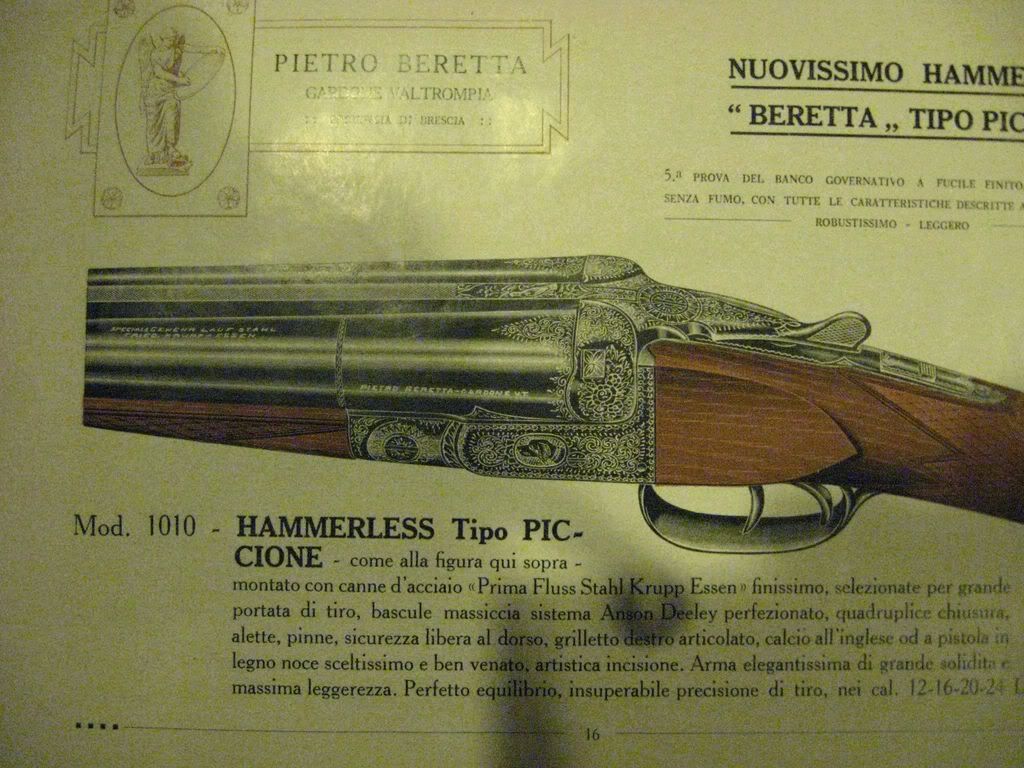 The only images I have, show an Eagle stamped on the top of the tubes. Given the developing relationship between Germany and Italy during this period, it is not surprising. It was during this time that Beretta introduced their o/u line. I only contributed some catalog scans to Jim. He did all the fine work. Pete
|
|
|
|
|
Joined: Jan 2002
Posts: 1,608 Likes: 109
Sidelock
|
|
Sidelock
Joined: Jan 2002
Posts: 1,608 Likes: 109 |
|
|
|
|
|
Joined: Aug 2007
Posts: 12,847 Likes: 541
Sidelock
|
|
Sidelock
Joined: Aug 2007
Posts: 12,847 Likes: 541 |
From the PDF, it appears that there were the intertwined Krupp 3 Ringes or it could have been another mark. With the Prima Fluss Stahl Krupp Essen stamp, I would hedge my bets toward Liege, possibly with a broker in Germany. I thought you had a 1910 Beretta catalogue?
Kind Regards,
Raimey
rse
|
|
|
|
|
Joined: Aug 2011
Posts: 52
Sidelock
|
|
OP
Sidelock
Joined: Aug 2011
Posts: 52 |
sorry for the oversight guys...I've sent to:
Mark (you need some Italian beauties in your shop to offset those Frenchies you keep up there)
John Boyd
George Newbern (Ken Pendleton just got in a 1929 24 gauge perfect for GA quail)
jimbode@nctv.com
|
|
|
|
|
Joined: Jan 2002
Posts: 7,726 Likes: 129
Sidelock
|
|
Sidelock
Joined: Jan 2002
Posts: 7,726 Likes: 129 |
Received; many thanks...Geo
|
|
|
|
|
Joined: Nov 2005
Posts: 4,598
Sidelock
|
|
Sidelock
Joined: Nov 2005
Posts: 4,598 |
... I thought you had a 1910 Beretta catalogue? I do. Pete
|
|
|
|
|
Joined: Feb 2003
Posts: 1,681 Likes: 27
Sidelock
|
|
Sidelock
Joined: Feb 2003
Posts: 1,681 Likes: 27 |
Yes, please Jim:
quailman85749 @ hotmail.com
thank you
[IMG]
|
|
|
|
|
Joined: Aug 2007
Posts: 12,847 Likes: 541
Sidelock
|
|
Sidelock
Joined: Aug 2007
Posts: 12,847 Likes: 541 |
I think that if you looks at their catalogues you will see sporting weapons sourcing, Britian, etc., then probably component sourcing either just prior to WWI or post WWI then they were sourcing raw components leading up to internal sourcing. With the Pieper connection, Krupp, etc. a gunmaker just could not compete with the effort and price in Liege. Would really like to see some of the Italian maker's ledgers during the time in question.
Kind Regards,
Raimey
rse
|
|
|
|
|
Joined: Jan 2002
Posts: 299 Likes: 16
Sidelock
|
|
Sidelock
Joined: Jan 2002
Posts: 299 Likes: 16 |
I would love a copy lawrence@print1.com
|
|
|
|
|
Joined: Oct 2004
Posts: 194
Sidelock
|
|
Sidelock
Joined: Oct 2004
Posts: 194 |
I sold my Beretta SXS 12ga about three weeks ago, if I still had it I would post a picture of th side barrel stamping, ie."FLUS STAHL KRUPP ESSEN", The barrel flats were proof dated "1948". FWIW
Jerry
|
|
|
|
|
Joined: Aug 2007
Posts: 12,847 Likes: 541
Sidelock
|
|
Sidelock
Joined: Aug 2007
Posts: 12,847 Likes: 541 |
Too bad Jerry. I've looked a bit and firearms merchants like August Stukenbrok, Einbeck - circa 1913 had the following
Rekord Selbstspanner-Doppelflinte
Spezialwaffen für starke, rauchlose Pulverladungen
Just below that was
Selbstspanner Doppelflinte Marke "Aste"
Fluß Stahl Krupp Essen
Seems any "Aste" stamped sporting weapon, double or drilling, wore Krupp Fluß Stahl tubes.
I'm sure "Chokebohrung, Amtlich Rauchlos Beschossen" is in the mix also.
Right below that was a listing for System Anson & Deeley, Marke F.N.
A few years earlier circa 1901, a Mr. August Reichwald was the sole representative for the U.K and the Colonies first notes that tubes are being indirectly imported into the U.K. then makes a distinction between Krupp's Fluß Stahl(Acier Fondu)
and Krupp's Special Gun Barrel Steel with the 3 interlaced Ringes. I read between the lines that the Krupp steel was being made in Germany and the tubes at another location in another country.
Kind Regards,
Raimey
rse
|
|
|
|
|
Joined: Aug 2011
Posts: 52
Sidelock
|
|
OP
Sidelock
Joined: Aug 2011
Posts: 52 |
Raimey, if I understand your point, it is an interesting question. I believe you posit that some manufacturer was using Krupp steel to fabricate shotgun barrels in the 1920s & 30s - then selling the finished product to Beretta and others. I'd have to re-read a lot of source material, but my recollection is that Beretta catalogs refer to (many different grades of) "Krupp Steel", but they don't actually say "Krupp barrels". Krupp is clearly the only name on the barrels themselves. A potential support for this scenario is that a number of Beretta catalogs also reference the 'action' as being made of "Krupp Steel", and I presume the actions were fabricated by Beretta itself.
Can anyone shed any light on this theory????
|
|
|
|
|
Joined: Nov 2005
Posts: 4,598
Sidelock
|
|
Sidelock
Joined: Nov 2005
Posts: 4,598 |
Jim,
From the image I posted above of the 1932 catalog:
con canne d'acciaio <<Prima Fluss Stahl Krupp Essen>> finissimo
With the finest steel barrels <<Prima Fluss Stahl Krupp Essen>>
A couple of more:
1938 Model 410 Prima Geweher Lauf Stahl Fried Krupp Essen
1938 Model 409 acciaio speciale Krupp
Pete
|
|
|
|
|
Joined: Aug 2007
Posts: 12,847 Likes: 541
Sidelock
|
|
Sidelock
Joined: Aug 2007
Posts: 12,847 Likes: 541 |
Jim:
First, I would say that accurate info about the Belgium craftsmen is difficult to confirm. But let's take some of their numbers say 5 or 10 years prior to WWI. There were some 70k folks working in an around Liege in the gunmaking industry. The area of Jupille seems to contain the bulk of the mechanics who for the most part rolled out the bulk of the steel tube production for export, although it is possible that mechanics in Nessonvaux like E. Heuse-Lemoine contributed also. I've seen a couple references that point to the area of Jupille having an exclusive right to use Krupp steel in the production of gun tubes. Considering the area, and also that a specific maker was not named, I think it points to Laurent Lochet-Habran. This area was noted as being able to churn out say over 1500 tubes per day and let's say there were 6 working days per week, so we are looking at 1/2 million tubes per day or 1/4 million tubesets per year. Where were they all going? I would say that all pre-WWI American made sporting weapons that wear run of the mill Krupp tubes(Fluß Stahl Krupp Essen, etc.) can find their origins in Jupille. Realizing the German foot-print there as well as Sauer's trademark protection, for now I see few other options. Post WWI, I'm not sure of the tubeset production numbers, but with 70k folks in the gunmaking industry prior to WWI, I don't think they went away. There's a fallacy around sporting weapons that a gunmaker or gunmaking area took the raw materials from the earth and forged every piece of their wares in-house by the sweat of his brow, composing components for the sporting weapon. Enter economics side-stage left - it was all about the Benjamins. Catalogues might provide some insight but although not a statistical triumph, I'd say locating a handful of Italian offerings with Krupp steel tubes that wear LLH would be definitive. I don't think the Germans want to acknowledge their sourcing of the Belgians, but I don't see any other way that the retailers were able to peddled price point weaspons without sourcing the mechanics of Liege, who embraced mechanization early on in their endeavors. I'm not into finger pointing but the preponderance of evidence is heavily tilting the scales that way and I don't think it any different for the Italian makers. If the Brits are noted as indirectly sourcing Krupp tubes, I'd say all were regarding price point sporting weapons. I invite any & all info to the contrary.
Peter:
As a wild guess, I would say that Acciaio Speciale Krupp has its origins at Acciai Speciali Terni, which was founded in 1884? It may also be a specific recipe or solely note that the tube steel was sourced in country as a Krupp recipe and Krupp sanctioned.
Kind Regards,
Raimey
rse
|
|
|
|
|
Joined: Aug 2007
Posts: 12,847 Likes: 541
Sidelock
|
|
Sidelock
Joined: Aug 2007
Posts: 12,847 Likes: 541 |
I believe this to be an early 1900s, pre-WWI listing for a Group 120 - Hunting equipment: "(f.) LOCHET-HABRAN, Jupille (Liege). ''Fabrication of steel gun barrels of all kinds and all calibers for portable fire-arms for hunting, war, fancy and exportation.— Steel barrels for ordinary « Flobert » carabines, for shooting and precision shooting, adapted hooked-barrels and hooked-barrels, called 1/2 blocks, barrels of« Krupp » steel. —Special steel for hunting gun barrels.—False breeches and separate fittings for all sorts of guns. Distinctions : Antwerp, 1885; Barcelone, 1888; Brussels, 1888, Golden medals; Paris, 1889, Golden medal and Diploma of honour; Scheveningue, 1892, Diploma of honour; Chicago, 4893, out of competition; Antwerp, 4894, Golden medal; Brussels, 1897, Diploma of honour; Paris, 1900, Golden Medal" Difficult to keep all info at the finger tips, but below is an advert that notes a production of 3k tubes per day(1928?) 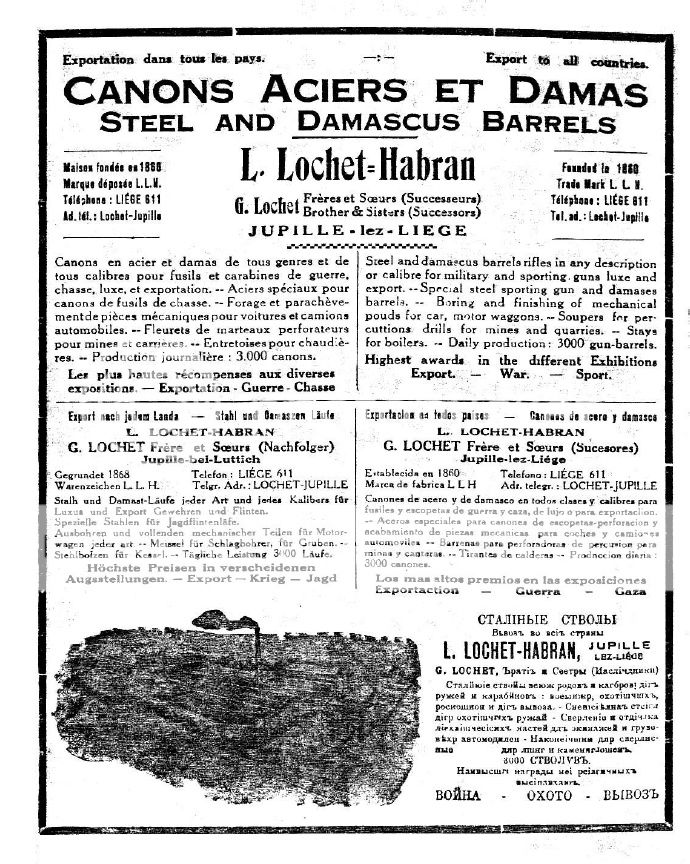 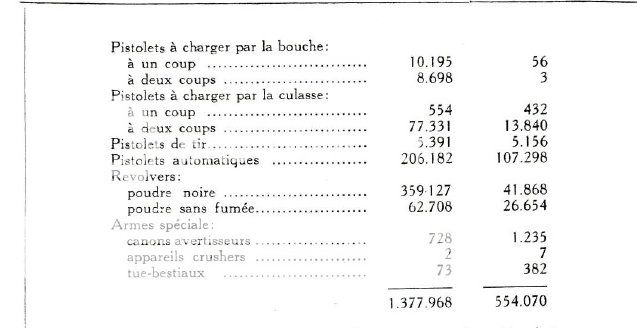 Liege Proofhouse numbers compared between 1913 & 1926 I believe. Kind Regards, Raimey rse
|
|
|
|
|
Joined: Aug 2011
Posts: 52
Sidelock
|
|
OP
Sidelock
Joined: Aug 2011
Posts: 52 |
Raimey & I have gone back and forth a little off-line on the subject of just WHO turned the tubes that were made of Krupp steel & wound up on Beretta guns: (10) Krupp, (2) Beretta, or (3) a Belgian fabricator.
Anyone have insights to share?
Of course, the barrels in question carry the Krupp name/logo, but that could in fact reference just Krupp's contribution of steel. A quick scan around the web turned up numerous guns stamped LLH by the Belgian firm Laurent Lochet-Habran...but I've not seen that mark on the few pre-war Berettas I've had the opportunity to inspect. Stamping would of course be determinative.
What say you guys?
|
|
|
|
|
Joined: Nov 2005
Posts: 4,598
Sidelock
|
|
Sidelock
Joined: Nov 2005
Posts: 4,598 |
...Of course, the barrels in question carry the Krupp name/logo, but that could in fact reference just Krupp's contribution of steel. A quick scan around the web turned up numerous guns stamped LLH by the Belgian firm Laurent Lochet-Habran...but I've not seen that mark on the few pre-war Berettas I've had the opportunity to inspect. Stamping would of course be determinative... Without stamped barrels everything is speculation. We know Krupp was licensing their formulations. Who poured the steel, rolled it, etc. needs verification. Pete
|
|
|
|
|
Joined: Aug 2007
Posts: 12,847 Likes: 541
Sidelock
|
|
Sidelock
Joined: Aug 2007
Posts: 12,847 Likes: 541 |
I had forgotten that S,D&G were Krupp Agents and that may go a long way to explain the Sauer-Liege-U.S. of A. sporting weapons triangle, but I think the following sums it up nicely.
"Krupp Steel Barrels - April 2nd, 1902
We are informed by the makers of Krupp steel barrels(for whom we are agents) that they have heard that some manufacturers have been selling guns with steel barrels and representing them as being "Krupp steel." All genuine Krupp steel barrels are marked as follows:
"A" for rifle barrels, marked on the bottom of the barrel guß-stahl (cast steel) Krupp Essen
"B" for shotgun barrels, marked on the bottom of the barrel fluß-stahl (fluid steel) Krupp Essen.
"C" for special steel for either shotgun or rifle barrels marked "Spezial Gewehr Lauf Stahl Fried. Krupp Essen." encircling three interlacing rings on the top of the barrel.
As it is against the law to call steel gun barrels Krupp steel unless they are Krupp steel and stamped as above, we are instructed by the manufacturers to stop the unauthorized use of their name. As it is to the interest of every sportsman who buys a gun with Krupp steel barrels to get what he wants we trust you will publish this in your paper to warn the public.
SCHOVERLING DALY & GALES"
The Italians did not reinvent the wheel on making Krupp tubes, they sourced them from a Krupp outlet and that outlet was Liege/Jupille, the sole authorized Fluß Stahl Krupp Essen. The only source of Krupp Spezial Weapons Grade Steel was Sauer and there are no exceptions. As far as I can tell, Krupp did not make 1 sporting weapon tube and made 0(zero) Spezial Weapons Grade Steel tubes. S,D&G had minimized their footprint post WWI so I wonder who took their place. If Italian sporting weapons are wearing genuine Krupp Steel Tubes, that would had to have originated at a Krupp outlet. We need a maker's ledger.
As a side-note, on March 6th, 1897 "The Field, The Country Gentleman's Newspaper" either performed a test or had a test performed on 3 scattergun tubes, 2 of English variety and 1 delivered by Krupp(says Spezial Stahl but no 3 Ringe), although I have serious reservations they actual made it but subbed the effort to Sauer. Tubes were 12 bore being 18.6 mm in diameter & having a wall thickness of 2.54mm. This is one of the very few instances where the concern Krupp and a sporting weapons tube are associated. Krupp began development of the Spezial Gewehr Lauf Stahl in 1893 and filed a trademark in 1896, I believe.
Kind Regards,
Raimey
rse
|
|
|
|
|
Joined: Aug 2007
Posts: 12,847 Likes: 541
Sidelock
|
|
Sidelock
Joined: Aug 2007
Posts: 12,847 Likes: 541 |
Poldi's Antikorro & Röchling's SonderStahl, etc. had authorized outlets in specific gunmaking centres similar to Krupp's Spezial Gewehr Lauf Stahl thru Sauer. I've only seen the Spezial Gewehr Lauf Stahl stamp in 2 languages: English & German.
Kind Regards,
Raimey
rse
|
|
|
|
|
Joined: Aug 2007
Posts: 12,847 Likes: 541
Sidelock
|
|
Sidelock
Joined: Aug 2007
Posts: 12,847 Likes: 541 |
Post WWI, let's say that Jupille was turning out 1k to 1.2k braces of scattergun tubes per day so that 350k tubesets per year. Let's also assume that it commenced in 1920 and continued for 10 years to 1930. That's 3.5 million scattergun tubesets and not all were Krupp mind you but where were they going?
Kind Regards,
Raimey
rse
|
|
|
|
|
Joined: Aug 2007
Posts: 12,847 Likes: 541
Sidelock
|
|
Sidelock
Joined: Aug 2007
Posts: 12,847 Likes: 541 |
The 1897 English vs. Krupp tube steel test results: 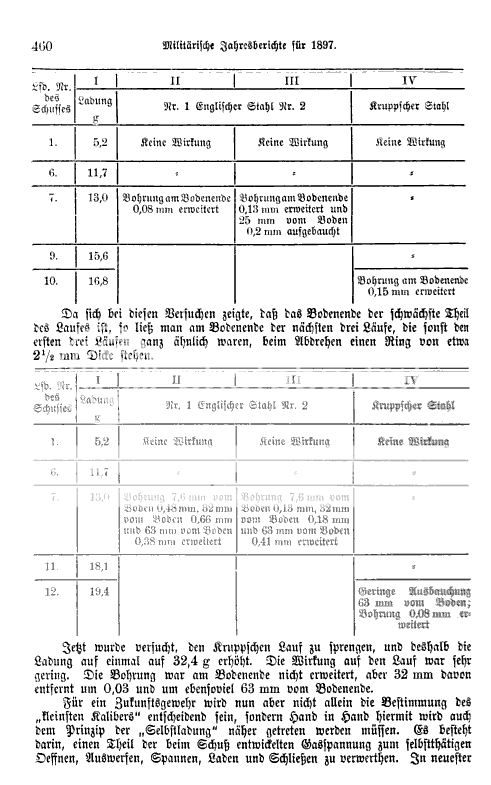 A translation may prove insightful. Kind Regards, Raimey rse
|
|
|
|
|
Joined: Aug 2007
Posts: 12,847 Likes: 541
Sidelock
|
|
Sidelock
Joined: Aug 2007
Posts: 12,847 Likes: 541 |
Krupp & Sauer were very, very chummy and from what I can glean the actual phrase of the period for the protection for the Sauerwerks's sole right to manufacture tubes of Krupp's 3 Ringe Stahl is "Kruppschen Gewehrlauf-Sonderstähle" and I'm not sure when the advertising on the tube reflected Krupp Spezial Gewehrlauf Stahl Drei Ringe.
Kind Regards,
Raimey
rse
|
|
|
|
|
Joined: Aug 2007
Posts: 12,847 Likes: 541
Sidelock
|
|
Sidelock
Joined: Aug 2007
Posts: 12,847 Likes: 541 |
I finally found the thread I was looking for with a tube stamped Acier Special Pour Poudre Pyroxylée: http://www.doublegunshop.com/forums/ubbt...&PHPSESSID=Kind Regards, Raimey rse
|
|
|
|
|
Joined: Aug 2007
Posts: 12,847 Likes: 541
Sidelock
|
|
Sidelock
Joined: Aug 2007
Posts: 12,847 Likes: 541 |
Well, the short answer is that economically & physically Italy could not produce it own tube steel bars pre-WWI.
Jim wasn't convinced or converted by my theory on the sourcing of the Belgians on availability of rough bored tubes. But he might be swayed by the underlying currents of Italy's steel woes. In brief, Bagnoli, Piombino, Portoferraio and Terni Italy's major steel production centers. The Terni Steelworks Company was founded on March 10th, 1884 and was a hydro-power(waterfalls) facility, and later electrical, as Italy had little coal. It was a facade and was propped up with national monies and produced costly, poor quality steels from imported pig iron. A gunsmith would not have used poor quality steel in his tubes, even if it was cheap. Low quality & bad name allowed Armstrong(some portion of Armstrong, Whitworth & Co.) to build an armament facility(near Naples?) by 1902 that used Elba's ore. Terni did have a 100 ton hammer, one of the largest at the time. Both Krupp and Vicker's had a stake in the steel market in Italy and in 1905 a Krupp steel process plant was built as a source for steel plates. A year later Vickers amalgamated with Terni for some venture till an abrupt halt in 1922. There were some patent issues with Harvey & Midvale on plates up till WWI.
Now there were some small blast furnaces in the Val Trompia region but Terni either had very small ones or none at all. The ore was mined on the Isle of Elba and then sold to Britain. Then Italy either traded for or purchased pig iron and I would guess that Vicker's involvement began here. Italy suffered from not having an integral cycle steelworks(all stages from ore to steel are completed in one general locale). In 1899 a facility named Portoferraio was built was 2 blast furnaces. A couple years later in 1904/1905 Naples was correcting their financial house and constructed the Piombino facility. By this time Italy had zero coal and imported 75% from England and 25% from Germany. 5 years later an integral cycle steelworks was constructed at Piombino in the Tuscan region but I don't think they would have worked out the kinks till after WWI and probably in the late 1920s when Italy seemed more in control of raw materials as well as quality control.
Kind Regards,
Raimey
rse
|
|
|
|
|
Joined: Aug 2011
Posts: 52
Sidelock
|
|
OP
Sidelock
Joined: Aug 2011
Posts: 52 |
Raimey has a great background in metallurgy, and also the research tenacity of a bulldog. He's working on an article about Beretta's history regarding the barrels on their side by side guns; looking back over the past 100 years or so.
His comments above really go to the sourcing of steel, but we're also very interested in better understanding how much finish processing Baretta actually did in Gardone in order to mount completed tubes to their guns.
Clues to that question could be found in the kinds of process machinery Beretta had or didn't have on-site...or maybe old catalog entries from the 1940's. If you have any info to share, especially about the period just before and after WWII, please post here or email me at jimbode@nctv.com
thanks
|
|
|
|
|
Joined: Aug 2007
Posts: 12,847 Likes: 541
Sidelock
|
|
Sidelock
Joined: Aug 2007
Posts: 12,847 Likes: 541 |
I don't know that my pool of knowledge in metallurgy is that deep, but I do know how to stack atoms. Anyway, it seems that the powers that be in Italy in the last 1/4 of the 19th century wanted Italy to be self sufficient in arms, armament, etc. So the government propped up steel making facilities like Terni, which was a poor location regarding logistics and steel oriented concerns. Commendatore Vincenzo Stefano Breda(expired on 1.03.1903) was a very influential Viennese fella in addition to being an engineer at an armament facility, government funded, in proximity of the Terni steel facility, which had zero British machinery and relied heavily on the Belgian Cockerill concern with some other French & Swiss additions. The forging portion being almost totally Belgian so I would assume Beretta's early frame to be of some Cockerill steel variant. There must have been a Beretta-Breda-Terni sourcing triangle but I'm not sure just yet and I don't know that early on the Breda is that of Machinefabriek Breda/Ernesto Breda & Company(Milan), not sure of the founding date(1886? name change -from Bamat & Co., Cerimedo & Co.). Ernesto Breda was some cousin of Vincenzo Stefano Breda. Both Krupp & Vickers saw an huge opportunity to separate the government from their monies and Midvale & Bethlehem Steel were in on the act also but Krupp & Vickers made out like bandits and circa 1907 all including Fiat(founded 1899) required a new infusion of government cash. Government cash which poured in with the facility opened and closed at times and out poured poor quality steel that they exported and dumped on someone. I'm sure on occasions a lack of raw materials forced them to close their doors until supplies were replinished. Considering the difficult times of the 1930s, it may have been post WWII till all got their affairs in order.
Kind Regards,
Raimey
rse
|
|
|
|
|
Joined: Aug 2007
Posts: 12,847 Likes: 541
Sidelock
|
|
Sidelock
Joined: Aug 2007
Posts: 12,847 Likes: 541 |
Information is mounting that the Ateliers Jaspar(Joseph Jaspar), Société Anonyme, Liege, of Albert Jaspar was instrumental in the early Belgian milling machines and borers, possibly prior to the purchase of Pratt & Whitney machines and for sure cheaper seeing a Jaspar model for external turning was say 1200 Francs while the P&W was 5000 Francs. Albert Jaspar more than likely was about the source for machines tools in Liege. One of his staples was a 3 tube boring machine, which looks to have utilized a carriage where the tubes were fixed and then engaged into the square head borer. I don't know if this machine made it to Italy or if it was the means by which the early tubes were made & sold to the Italian makers. An image would prove educational I'm sure.
Kind Regards,
Raimey
rse
|
|
|
|
|


