|
S |
M |
T |
W |
T |
F |
S |
|
|
1
|
2
|
3
|
4
|
5
|
6
|
|
7
|
8
|
9
|
10
|
11
|
12
|
13
|
|
14
|
15
|
16
|
17
|
18
|
19
|
20
|
|
21
|
22
|
23
|
24
|
25
|
26
|
27
|
|
28
|
29
|
30
|
31
|
|
|
|
|
|
Forums10
Topics39,712
Posts564,502
Members14,612
| |
Most Online9,918
Jul 28th, 2025
|
|
|
|
Joined: Apr 2006
Posts: 641 Likes: 2
Sidelock
|

Sidelock
Joined: Apr 2006
Posts: 641 Likes: 2 |
|
|
|
|
|
Joined: Sep 2008
Posts: 301
Sidelock
|
|
Sidelock
Joined: Sep 2008
Posts: 301 |
Kirk,
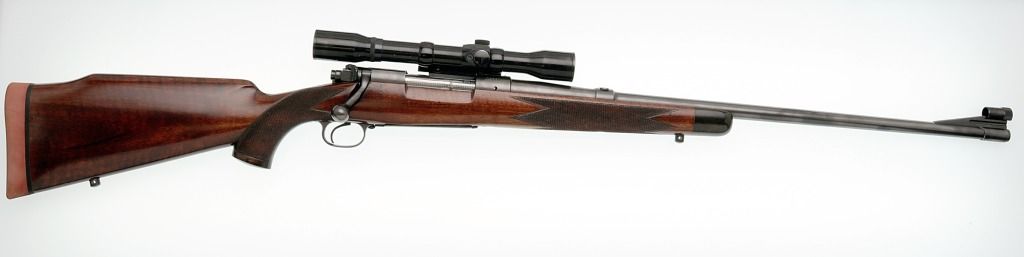
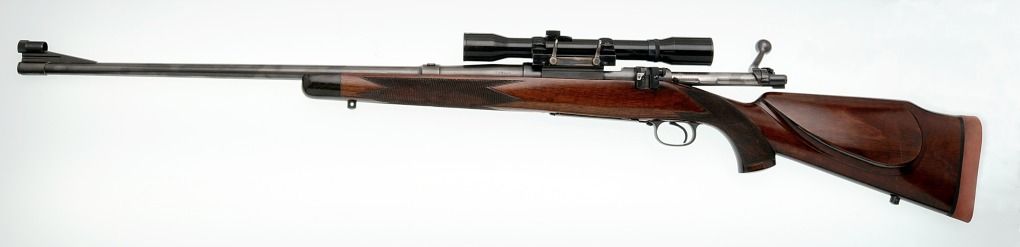
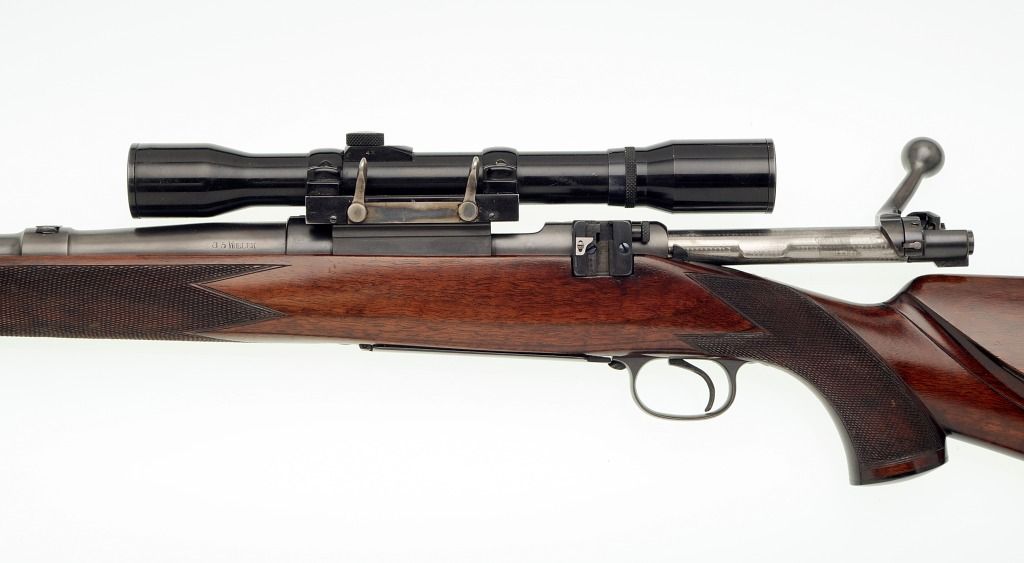
I can't say how the treatment of the bolt and extractor was done. As you say, it doesn't appear to be engine turning. It is extremely uniform, however.
Bill This metal treatment is a mystery to me as well. Sort of a cross hatched X pattern. I've seen it in both British and American rifles. Sometimes it's really neat and uniform, sometimes quite erratic and "doodled in". I have no idea how it's done. Beautiful rifles - thanks for showing.
|
|
|
|
|
Joined: Oct 2007
Posts: 1,672 Likes: 4
Sidelock
|
|
Sidelock
Joined: Oct 2007
Posts: 1,672 Likes: 4 |
I believe they use a burnishing tool and "scrape" the pattern into the metal. Tiny bit of metal is displaced making a good place for oil to hold onto.I have seen it used on machine tool ways also.
|
|
|
|
|
Joined: Sep 2008
Posts: 1,153
Sidelock
|
|
Sidelock
Joined: Sep 2008
Posts: 1,153 |
I believe they use a burnishing tool and "scrape" the pattern into the metal. Tiny bit of metal is displaced making a good place for oil to hold onto.I have seen it used on machine tool ways also. The scraper is usually a long flat rod with one end hardened and ground to form a slightly curved surface with perpendicular edges. The butt end of the tool is rested upon the top of the operator's shoulder and the operating end is pressed down onto/into the steel's surface at a long angle while also being drawn toward the operator. The operator's hands provide pressure and guidance for the operating end while the backward movement of the operator's body draws the tool's end toward him, across the steel surface. RDH45 is correct about the treatment of the machine tool ways, AAMOF the process of 'scraping' the ways is SOP when refurbishing worn machine tools. The scraping is VERY functional (actually quite necessary) on the machine tool ways but is largely cosmetic when used on rifle bolts. Scraping is typical of the better prewar rifles while engine-turning largely displaced it on postwar rifles, at least that's my impression. Regards, Joe
You can lead a man to logic but you can't make him think. NRA Life since 1976. God bless America!
|
|
|
|
|
Joined: May 2011
Posts: 621
Sidelock
|
|
Sidelock
Joined: May 2011
Posts: 621 |
This was the typical crosshatching pattern on all Griffin and Howe rifles in the early years. The damascening we now know, became popular as far as I have been able to ascertain, around 1930. HTH
|
|
|
|
|
Joined: May 2011
Posts: 621
Sidelock
|
|
Sidelock
Joined: May 2011
Posts: 621 |
|
|
|
|
|
Joined: Jul 2012
Posts: 4,966 Likes: 353
Sidelock
|
|
Sidelock
Joined: Jul 2012
Posts: 4,966 Likes: 353 |
Joe,
Your description of a scraper is precisely correct,for those used to scrape flat surfaces like machine ways,dovetails,etc.German( and I would guess Austrian,Belgian,etc) gunsmiths use a different type scraper,with which they fit curved surfaces together. They scrape front sights,rear sight bases,clawmount bases,etc.,to achieve a close fit before soldering.They typically make these from 3-corner files,and I suppose if they bought one, it would be like a "bearing scraper".I never saw one used on a rifle bolt,so I have no idea how the pattern was achieved.Scraping is just about my least favorite thing to do.
Mike
|
|
|
|
|
Joined: May 2010
Posts: 1,331 Likes: 110
Sidelock
|
|
OP
Sidelock
Joined: May 2010
Posts: 1,331 Likes: 110 |
Interesting, can you provide some pictures of the scrapers you use? Thanks
Last edited by LRF; 08/27/12 09:27 AM.
|
|
|
|
|
Joined: Jul 2012
Posts: 4,966 Likes: 353
Sidelock
|
|
Sidelock
Joined: Jul 2012
Posts: 4,966 Likes: 353 |
LRF
I haven't learned yet how to post pictures(I surprise myself that I can post comments).Just take a 8-10" 3 corner file and very slowly grind the teeth off, being careful to avoid "burning" it.Grind in the middle of the wheel, so you wind up with 3 concave(ie hollow ground)surfaces.This gives you 3 edges to scrape with.I sharpen them with wornout 320 grit abrasive backed up by a file,two edges at once, across the"concave". Other people use a stone,and one of my friends used a buffing wheel,to sharpen them. I resist using a buffing wheel,I've grown to like my hands and fingers,proper scrapers are sharp.
Mike
|
|
|
|
|
Joined: May 2010
Posts: 1,331 Likes: 110
Sidelock
|
|
OP
Sidelock
Joined: May 2010
Posts: 1,331 Likes: 110 |
Mike,
You can email them to me and i will post for you
|
|
|
|
|